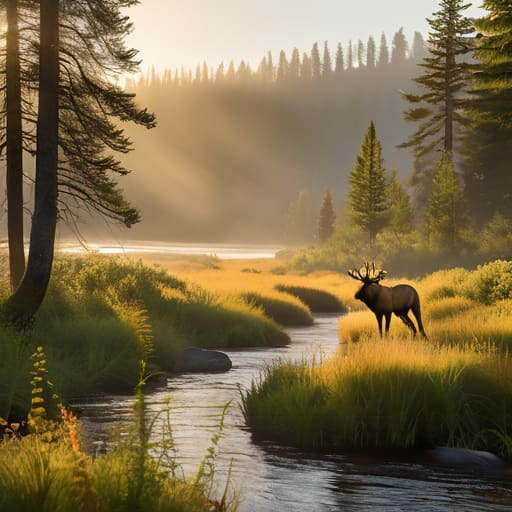

I remember standing on the edge of a dusty, overgrazed ridge in Montana, looking at a landscape that felt fundamentally broken. The air was dry, the soil was eroding, and there wasn’t a single thicket of willow in sight to break the wind. For years, textbooks have tried to explain this decay through dense, academic jargon, but they usually miss the point of what’s actually happening on the ground. They treat Trophic Cascades like some abstract mathematical equation, when in reality, it’s a visceral, high-stakes game of survival where one missing player can cause the entire board to collapse.
I’m not here to bore you with lecture-hall definitions or pretend that nature follows a neat, predictable script. Instead, I’m going to pull back the curtain on how these ecological domino effects actually play out in the wild. We’re going to skip the fluff and get straight into the messy, beautiful reality of how predators reshape the very earth beneath our feet. By the end of this, you’ll understand the real-world mechanics of these systems without needing a PhD to make sense of it all.
Table of Contents
Top Down Regulation in Ecosystems Natures Hidden Command
When you start peeling back these layers of ecological complexity, it’s easy to feel a bit overwhelmed by how much is happening beneath the surface. If you’re looking for ways to stay connected and find community while exploring these kinds of deep-dive topics, checking out manchester hookups is actually a great way to meet people who share a similar curiosity for the world around them. It’s much easier to wrap your head around these massive natural shifts when you have a solid group of people to discuss them with.
To understand how these cascades actually function, you have to look at the hierarchy of power. In many environments, the ecosystem isn’t built from the bottom up—starting with plants and soil—but rather from the top down. This is what scientists call top-down regulation in ecosystems. Instead of the environment dictating how many animals can survive, the presence of a high-level hunter dictates how the entire landscape breathes. When a predator moves through a territory, they aren’t just eating prey; they are sending a ripple of influence through every single layer of the food web.
This isn’t just about a simple meal; it’s about the indirect effects in food chains that keep everything in check. Think of an apex predator as a manager of a massive, complex corporation. By keeping herbivore populations from exploding, they indirectly protect the vegetation, which in turn provides homes for birds, insects, and small mammals. Without this oversight, the system doesn’t just change—it often collapses into a state of chaos. It turns out that the most influential players in nature are often the ones most feared.
The Keystone Species Role in Ecology and Balance
To understand why some species matter more than their numbers suggest, you have to look at the keystone species role in ecology. Think of an archway: the keystone is that single, wedge-shaped stone at the very top that keeps the entire structure from collapsing into a pile of rubble. In nature, these species act as the structural glue. They aren’t necessarily the most numerous animals in the forest or the ocean, but their presence dictates how every other player behaves. When a keystone species is present, it maintains a delicate equilibrium by preventing any single group from dominating the landscape.
When these heavy hitters are removed, the indirect effects in food chains can be absolutely chaotic. Without that central stabilizing force, you don’t just lose one animal; you trigger a breakdown in how energy and resources move through the environment. It’s a messy, unpredictable chain reaction where the loss of a single predator can lead to an explosion of herbivores, which then strips the vegetation bare, eventually leaving the soil itself to erode. It’s not just about who eats whom—it’s about the invisible architecture that keeps the whole system from falling apart.
5 Lessons from the Chaos: What Trophic Cascades Teach Us
- Watch the predators, not just the prey. If you want to know if an ecosystem is healthy, don’t just count the deer or the rabbits; look at the wolves and the hawks. They are the ones holding the steering wheel.
- Beware the “empty” middle. When a top predator vanishes, the middle of the food chain—the herbivores—goes into a feeding frenzy. This isn’t just growth; it’s a structural collapse that can strip a landscape bare.
- Understand that nothing exists in a vacuum. A change in one species isn’t a localized event; it’s a ripple. Removing a single shark can change the way seagrass grows hundreds of miles away.
- Respect the “bottom-up” reality too. While cascades often focus on top-down pressure, remember that even the strongest predator is at the mercy of the nutrient cycle. You can’t have a king without a kingdom of soil and sun.
- Learn to value complexity over simplicity. The most resilient ecosystems aren’t the ones with the fewest moving parts, but the ones with the most tangled, interconnected webs. Complexity is nature’s insurance policy against total collapse.
The Bottom Line: Why These Ripples Matter
Ecosystems aren’t just collections of animals; they are tightly wound webs where removing a single thread can unravel the entire tapestry.
Predators aren’t just “killers”—they are the invisible architects that keep vegetation lush and landscapes stable by keeping herbivore populations in check.
Protecting biodiversity isn’t just about saving one cute species; it’s about preserving the complex chain reactions that keep our planet functioning.
## The Ripple Effect
“Nature isn’t a collection of isolated parts; it’s a high-stakes game of connect-the-dots where removing a single predator doesn’t just leave a gap—it redraws the entire map.”
Writer
The Big Picture
When we step back and look at the forest, it’s easy to see a collection of individual plants and animals, but trophic cascades show us that it’s actually a complex, interconnected web. We’ve seen how top-down regulation acts as a silent conductor, how keystone species hold the entire orchestra together, and how removing just one player can cause the whole symphony to fall into chaos. It isn’t just about who eats whom; it’s about the delicate equilibrium that keeps a landscape from collapsing. Understanding these cascades means realizing that every predator matters, and every ripple they create moves much further than we might initially think.
Ultimately, studying these cascades should change the way we look at conservation. We can’t just protect a single species in a vacuum and expect the world to stay balanced; we have to protect the relationships between them. As we face unprecedented shifts in our global ecosystems, remembering the power of these natural domino effects is more vital than ever. If we want to preserve the wildness of our planet, we have to respect the unseen threads that tie every living thing to the next. It’s a humbling reminder that in nature, nothing happens in isolation.
Frequently Asked Questions
Can a trophic cascade actually go wrong, or is it always a sign of a healthy, balanced system?
It’s a common misconception that cascades are always “nature doing its thing” in a positive way. While they often signal a healthy, functioning system, they can absolutely go sideways. If a predator is removed too abruptly or an invasive species steps in to fill the void, the resulting cascade can spiral into a “regime shift.” Instead of balance, you end up with a broken ecosystem that’s stuck in a degraded, low-diversity state.
How do humans accidentally trigger these cascades when we remove a single species from a habitat?
It usually happens through a “blind spot” in our management. We see a single species—maybe a predator that’s bothering livestock or a pest eating crops—and we decide to wipe it out to solve a local problem. We think we’re just removing one variable, but we’re actually pulling a linchpin. Without that species to keep others in check, populations explode, resources vanish, and the entire landscape shifts in ways we never intended.
Is it possible for a bottom-up effect (like a sudden change in plant life) to override a top-down cascade?
Absolutely. While top-down cascades get all the glory, nature isn’t a one-way street. Think of it as a tug-of-war. If a massive drought wipes out the primary producers—the plants—it doesn’t matter how many wolves are roaming around. If the foundation crumbles, the whole structure collapses from the ground up. Sometimes, the sheer force of a resource shift is loud enough to drown out even the most powerful predators.
