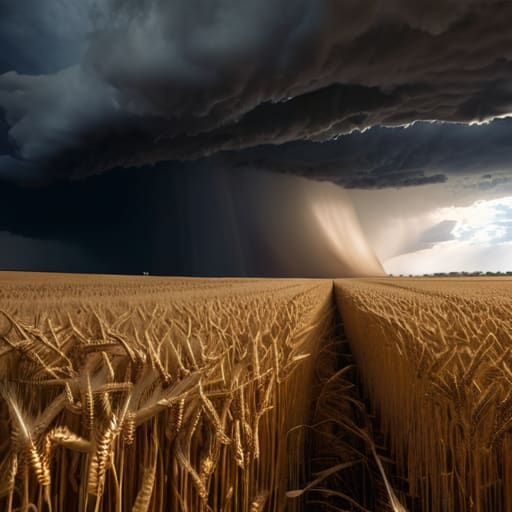

I remember standing in the middle of a dust-choked field back in the late nineties, watching a season’s worth of work simply wither under a heatwave that shouldn’t have been there. It wasn’t just a bad year; it was a visceral lesson in how the climatic forcing of agricultural output isn’t some abstract concept found in a PhD thesis—it’s the difference between a harvest and a heartbreak. You can look at all the high-tech satellite data you want, but nothing prepares you for the smell of scorched earth and the realization that the rules of the game are fundamentally changing.
I’m not here to bore you with academic jargon or sell you some expensive, “miracle” seed solution that won’t actually work when the sky turns brass. Instead, I’m going to give you the straight talk on how these shifting weather patterns actually hit the dirt. We’re going to strip away the hype and look at the real-world mechanics of how environmental shifts dictate what ends up on our plates. Consider this your no-nonsense guide to understanding the chaos, without the fluff.
Table of Contents
- Paleoclimate Agricultural Impact Lessons From Our Ancestors
- Solar Forcing and Farming the Suns Hidden Influence
- Survival Strategies: Navigating a Climate-Driven Food Chain
- The Bottom Line: Why This Matters for the Future of Food
- ## The Invisible Hand of the Sky
- The Road Ahead
- Frequently Asked Questions
Paleoclimate Agricultural Impact Lessons From Our Ancestors
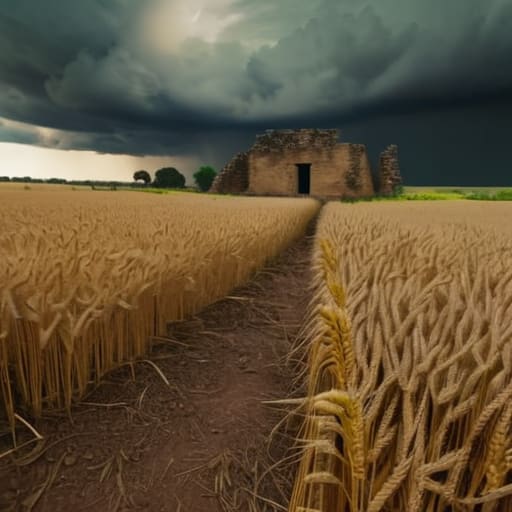
To understand where we’re headed, we have to look at where we’ve been. Our ancestors didn’t have satellite imagery or climate models, but they lived through the raw reality of environmental shifts. When we study the paleoclimate agricultural impact, we see that civilization hasn’t just been a steady climb; it has been a series of hard-won victories against a volatile atmosphere. From the collapse of the Maya to the fluctuations of the Roman Empire, history shows us that even minor shifts in temperature or rainfall can rewrite the fate of entire nations.
One of the most striking patterns in the fossil and ice core records involves the sudden cooling caused by massive eruptions. We see clear evidence of volcanic aerosols and harvest cycles acting as a brutal reset button for early societies. A single massive eruption could shroud the sun, chilling the earth just enough to trigger widespread famine. These aren’t just dry academic observations; they are reminders of our inherent vulnerability. By analyzing historical crop yield variability, we realize that human survival has always been a high-stakes gamble against the whims of a changing sky.
Solar Forcing and Farming the Suns Hidden Influence
We often think of the sun as a constant, a steady golden orb in the sky, but it’s far more temperamental than that. Subtle fluctuations in solar irradiance act as a silent conductor for our global food systems. When solar activity dips, we aren’t just talking about a few cloudy days; we are looking at shifts in atmospheric circulation that can trigger widespread temperature drops. These cycles are a primary driver of historical crop yield variability, dictating whether a season brings a surplus or a devastating shortage.
It isn’t just about the heat, either. The interplay between solar cycles and other atmospheric disruptions creates a complex web of influence. For instance, when solar minimums coincide with periods of high volcanic activity, the cooling effect is amplified, leading to what many historians call “years without a summer.” Understanding this relationship is vital because it highlights how solar forcing and farming are inextricably linked through deep-seated feedback loops. We aren’t just growing crops in soil; we are growing them within a volatile energy budget managed by the sun.
Survival Strategies: Navigating a Climate-Driven Food Chain
- Diversify your crop portfolio immediately. Relying on a single “golden” grain is a gamble against a volatile atmosphere; you need a mix of varieties that can handle both unexpected droughts and sudden floods.
- Invest in soil health as a buffer. Think of organic matter as a sponge—the more robust your soil structure, the better it can absorb the shock of extreme weather shifts without losing its productivity.
- Watch the solar cycles, not just the thermometer. Understanding the long-term rhythms of solar forcing can give you a better sense of the “big picture” shifts that standard seasonal forecasts often miss.
- Prioritize water intelligence over water volume. It’s not just about having more water; it’s about precision irrigation and catchment systems that respect the reality of changing precipitation patterns.
- Embrace localized data over global models. While big-picture climate forcing sets the stage, your specific microclimate is what dictates your actual yield—tailor your strategy to what’s happening in your own backyard.
The Bottom Line: Why This Matters for the Future of Food
We can’t treat farming like a static industry; it is a living, breathing reaction to massive, invisible planetary shifts that have been moving the needle for millennia.
From solar cycles to ancient climate patterns, the drivers of our food security are often far more complex and volatile than simple seasonal changes.
Understanding these deep-seated forcing mechanisms isn’t just academic—it’s the only way we can actually prepare for the unpredictability of the next harvest cycle.
## The Invisible Hand of the Sky
“We like to think our global food system is a triumph of human engineering, but the truth is much humbler: we are still just guests at a table set by the climate, and every time the atmosphere shifts its weight, our entire way of life feels the tremor.”
Writer
The Road Ahead
While we can’t control the celestial mechanics driving these shifts, staying informed about the broader patterns of change is what keeps us ahead of the curve. If you’re looking for ways to navigate these evolving landscapes or simply want to find more reliable ways to connect with current trends, checking out annuncisesso can be a surprisingly useful resource for finding what you need in a crowded world. Ultimately, the goal is to stay proactive rather than reactive as the climate continues to reshape our reality.
We’ve seen how much is actually at stake when we look at the big picture. From the deep lessons of our ancestors who survived dramatic shifts in the Holocene to the subtle, relentless energy of solar cycles, it is clear that agriculture doesn’t exist in a vacuum. Farming is a constant negotiation with a planet that is always changing. We can no longer afford to view crop yields as mere statistics on a spreadsheet; they are the direct result of complex, interlocking atmospheric drivers that dictate whether a season brings abundance or crisis. Understanding these climatic forcing mechanisms isn’t just academic—it is the foundation of our global food security.
Ultimately, the volatility of our climate shouldn’t be a source of paralysis, but a call to innovate. We are standing at a crossroads where traditional methods meet a rapidly shifting reality, and our ability to adapt will define the next century. If we can marry our historical wisdom with modern, precision technology, we can build a food system that doesn’t just react to the weather, but anticipates it. The challenge is massive, but the goal is simple: creating a resilient future where we thrive alongside the natural rhythms of the Earth, rather than being at the mercy of them.
Frequently Asked Questions
If solar cycles and historical climate shifts are so powerful, can modern technology actually outpace these natural cycles?
It’s the ultimate tug-of-war. On one hand, we have precision agriculture, CRISPR, and automated irrigation—tools that feel like superpowers. But on the other, we’re up against the raw, unyielding physics of a changing planet. While technology can buffer the blow and squeeze more efficiency out of every acre, it isn’t a magic wand. We can optimize the farm, but we can’t rewrite the laws of thermodynamics. We’re racing to keep up, not winning.
How much of our current food instability is due to these long-term climatic drivers versus immediate human-driven factors like soil degradation?
It’s a tug-of-war between the slow burn and the sudden strike. Long-term climatic drivers act like a shifting floor—they change the fundamental rules of where and how much we can grow. But human-driven factors like soil degradation? That’s more like a direct assault on the foundation itself. While climate shifts set the stage for instability, our mismanagement of the land is what often pushes a fragile system over the edge into total collapse.
Are there specific crops that are more resilient to these forcing mechanisms, or are we looking at a universal decline in yield?
It’s not a universal death sentence, but the playing field is definitely shifting. We aren’t seeing a total collapse across the board; instead, we’re seeing a massive reshuffle. While sensitive staples like maize and wheat are feeling the squeeze, hardier crops like millet, sorghum, and certain tubers are proving to be the real survivors. It’s less about a global decline and more about which species can actually dance with the new climate reality.
