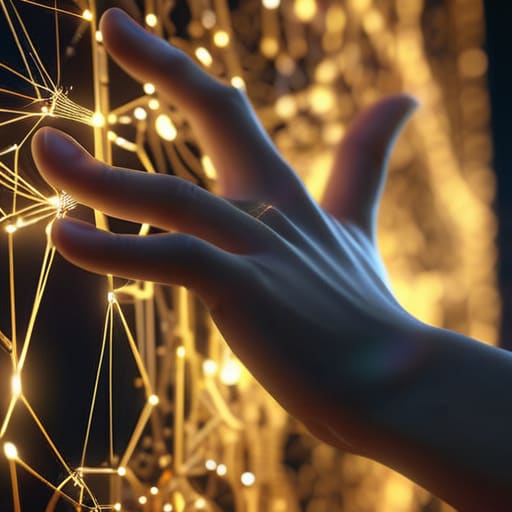

I was sitting in a crowded coffee shop last Tuesday, watching a group of teenagers sit in total silence, their faces illuminated by the blue light of their phones while they simultaneously laughed at a shared meme in a group chat. It hit me right then: the wall between our “online” lives and our “real” lives hasn’t just cracked; it’s completely evaporated. This is the messy, unpolished reality of Cyber-physical Sociality, and frankly, the academic papers trying to explain it are making it sound way more complicated than it actually is. We aren’t living in two separate worlds anymore; we’re living in one continuous, digital-physical loop that dictates how we eat, work, and even how we fall in love.
It’s easy to get lost in the technical weeds of these systems, but we shouldn’t lose sight of how they actually impact our real-world intimacy and personal connections. If you’re feeling a bit overwhelmed by how digital layers are changing the way we relate to one another, I’ve found that stepping back to focus on fundamental human connection is essential. Sometimes, looking into more grounded, local ways to navigate modern relationships—like exploring the nuances of casual sex edinburgh—can offer a much-needed perspective on how we maintain authentic agency amidst all this technological noise.
Table of Contents
I’m not here to feed you a bunch of high-level jargon or sell you on some utopian tech-bro fantasy. Instead, I’m going to pull back the curtain on how this shift is actually reshaping our social fabric. I promise to give you the straight truth—no fluff, no hype—based on what I’ve seen on the ground. We’re going to break down what this means for your relationships and your sanity, without the pretentious academic nonsense.
Architecting the Soul Cps Social Systems Architecture

When we talk about the blueprint for these systems, we aren’t just talking about servers and sensors. We’re talking about something much more intimate. Building a true CPS social systems architecture means designing a framework where data doesn’t just sit in a vacuum; it flows into the gaps between our physical movements and our digital impulses. It’s about creating a structural loop where the machine understands the context of a human gesture, and the human, in turn, learns to navigate the digital echo of that same action.
This isn’t just a technical upgrade; it’s a fundamental shift in socio-technical systems evolution. We are moving away from tools that we simply “use” and toward environments that we “inhabit.” To make this work, engineers have to stop thinking like pure coders and start thinking like sociologists. If the architecture doesn’t account for the messiness of human emotion or the unpredictable way a crowd reacts to a digital nudge, the whole system collapses into a hollow shell. We need a design that treats human-machine social interaction as the primary heartbeat of the entire machine.
Human Machine Social Interaction in the Digital Age

We’ve reached a point where talking to an AI feels less like querying a database and more like a weirdly intimate conversation with a stranger. This shift in human-machine social interaction isn’t just about better voice recognition or faster response times; it’s about the emotional weight we’re starting to assign to digital entities. We aren’t just using tools anymore; we are forming social bonds with algorithms that predict our moods and mirror our conversational quirks. It’s a strange, messy evolution that blurs the line between a utility and a companion.
This isn’t happening in a vacuum, though. As we lean harder into these digital relationships, we’re seeing a massive leap in socio-technical systems evolution. Our social structures are being redesigned from the ground up to accommodate entities that don’t have a heartbeat but certainly have an influence. We are essentially building a new kind of social fabric—one where the threads are made of both biological impulses and lines of code. It’s no longer about whether a machine can “think,” but rather how it participates in the complex dance of our daily lives.
Survival Tips for the Blurred Reality
- Stop treating your digital identity like a separate persona. In a CPS world, a bad interaction on a platform can have actual, physical consequences for your reputation and social standing.
- Audit your “digital shadow” regularly. Since our physical and social lives are merging, the data you leave behind isn’t just noise—it’s a blueprint that automated systems use to decide how they interact with you.
- Guard your cognitive sovereignty. As social systems become more integrated with our physical environments, the nudge from an algorithm can feel like your own intuition. Learn to pause and ask: “Is this my thought, or was it served to me?”
- Build “analog anchors.” To avoid getting lost in the feedback loops of hyper-connected social systems, you need physical rituals that don’t involve a screen to keep your sense of self grounded.
- Master the art of hybrid etiquette. We’re entering an era where being “present” means more than just showing up physically; it means understanding how to navigate the invisible layers of digital connectivity that surround every face-to-face encounter.
The Bottom Line: What This Actually Means for Us
We aren’t just “using” technology anymore; we are living inside a hybrid reality where the line between a digital notification and a physical sensation is becoming almost impossible to draw.
The architecture of our social lives is being rewritten by code, meaning the systems we build today will dictate how we experience empathy, trust, and connection tomorrow.
Navigating this shift requires more than just technical literacy—it demands a new kind of social intuition to stay grounded as our physical and digital selves merge into one.
## The New Social Fabric
“We used to log on to escape the world; now, we log on to inhabit it. Cyber-physical sociality isn’t about technology replacing human connection—it’s about the technology finally becoming the very air our relationships breathe.”
Writer
The New Human Reality
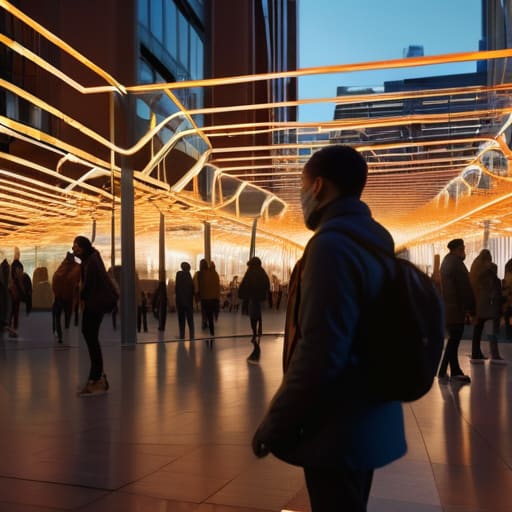
We’ve spent this entire deep dive peeling back the layers of what it actually means to live in a world where the digital and the physical aren’t just neighbors, but are fundamentally fused. We looked at the complex architecture required to sustain these systems and how the very nature of our social interactions is shifting from simple screen time to a much more visceral, integrated experience. It’s no longer enough to view technology as a tool we pick up and put down; it has become the very connective tissue of our social existence, reshaping how we trust, how we communicate, and how we perceive reality itself.
As we move forward into this uncharted territory, the goal shouldn’t just be to build faster networks or smarter machines, but to ensure that our humanity remains the core of the equation. We are the ones designing the boundaries of this new social landscape, and we have a massive responsibility to make sure it enhances our lives rather than diluting them. The lines between our online and offline selves are going to keep blurring, but as long as we stay intentional about our values, we can turn this technological evolution into a profoundly human renaissance.
Frequently Asked Questions
If our social lives are becoming this hybrid mix of digital and physical, where do we even draw the line for "privacy" anymore?
That’s the million-dollar question, isn’t it? The truth is, the line isn’t just blurring; it’s basically dissolving. We used to think of privacy as a physical boundary—a door you lock. Now, your data, your biometric rhythms, and even your social reputation are all part of the same continuous loop. When your smart home knows you’re stressed before you do, “private” stops being a place and starts being a vanishingly small pocket of unquantified thought.
Does this constant blending of machine and human interaction actually make us more lonely, or are we just evolving into a different kind of social creature?
It’s a bit of both, honestly. We’re definitely feeling that sting of loneliness because digital connection often lacks the “biological friction” of real life—the eye contact, the shared silence, the actual presence. But we aren’t just breaking; we’re adapting. We’re learning to find intimacy in pixels and community in algorithms. We aren’t becoming less social; we’re just expanding what “social” actually means, moving into a hybrid existence that’s still very much under construction.
What happens to the people who can’t—or won’t—plug into these cyber-physical systems? Are they just going to be left out of the social loop entirely?
That’s the million-dollar question, and honestly? It’s terrifying. We’re looking at a massive “participation gap.” If your banking, your healthcare, and even your social circles move into these integrated loops, being “off-grid” isn’t just a lifestyle choice anymore—it’s a form of social exile. We risk creating a new underclass of the disconnected, people who aren’t just offline, but effectively invisible to the systems that run our world.
