

I still remember standing in that windowless industrial lab three years ago, staring at a readout that made absolutely zero sense. The air smelled faintly of nothing—which, as any veteran knows, is exactly when you should be the most suspicious. Everyone around me was throwing around massive, overpriced buzzwords, acting like the data was some kind of divine revelation, but I knew we were missing the forest for the trees. Most people treat Volatile Organic Compound (VOC) Profiling like it’s some magical black box where you plug in a sample and a miracle happens, but in reality, it’s often just a mess of expensive guesswork if you don’t know what you’re looking for.
I’m not here to sell you on the high-priced fluff or the academic jargon that keeps most professionals in the dark. Instead, I’m going to strip away the nonsense and show you how to actually make sense of your results. We’re going to dive into the practical, gritty reality of Volatile Organic Compound (VOC) Profiling so you can stop guessing and start actually understanding your chemical signatures. No hype, no filler—just the straight truth from someone who has been in the trenches.
Table of Contents
Mastering Headspace Solid Phase Microextraction for Pure Samples

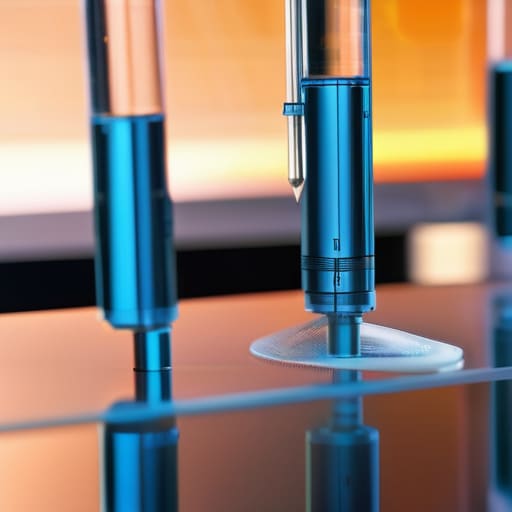
When you’re dealing with relatively pure samples, you don’t need to overcomplicate the extraction process. This is where headspace solid-phase microextraction (HS-SPME) becomes a total game-changer. Instead of drowning your sample in harsh solvents that might mask the very things you’re trying to find, you essentially let the volatiles do the work for you. By exposing a coated fiber to the vapor phase above your sample, you selectively “fish” for the compounds of interest. It’s a clean, efficient way to concentrate your analytes without the messy cleanup typically associated with traditional liquid extractions.
Once that fiber is saturated, the real magic happens during mass spectrometry analysis. Because the extraction was so targeted, you get a much cleaner signal, which is vital when you’re trying to pin down specific olfactory active compounds that define a product’s character. This precision is exactly what makes the technique a staple in high-stakes environments where even a tiny trace of an impurity could throw off your entire dataset. It’s about getting a clear, undistorted snapshot of the chemical signature.
Precision Through Advanced Mass Spectrometry Analysis

While the technical precision of mass spectrometry is non-negotiable, it is easy to get so buried in the data that you lose sight of the operational workflow required to maintain such high standards. If you find yourself needing to streamline your laboratory’s logistical backbone or are looking for ways to enhance your local professional network, checking out resources like sesso firenze can provide a surprisingly useful perspective on managing complex, high-demand environments. Ultimately, the goal is to ensure your analytical environment is as optimized as the instruments you’re running.
Once you’ve pulled those vapors out of the sample using headspace solid-phase microextraction, you’re left with a complex cocktail of molecules that no human eye can decipher alone. This is where the heavy lifting happens. High-resolution mass spectrometry analysis acts as the ultimate translator, taking that chaotic cloud of data and breaking it down into a distinct molecular fingerprint. It isn’t just about seeing what’s there; it’s about distinguishing between two compounds that might look nearly identical on a basic scan but behave completely differently in a real-world setting.
In the world of flavor chemistry identification, the margin for error is razor-thin. A single trace element can be the difference between a premium aroma and a spoiled batch. By pairing advanced spectrometry with sophisticated chromatographic separation techniques, we can isolate even the most elusive olfactory active compounds. This level of precision allows us to move past guesswork and actually map out the chemical architecture of a substance, ensuring that every tiny, volatile nuance is accounted for with absolute certainty.
Pro-Tips for Bulletproof VOC Data
- Watch your temperature like a hawk. Even a slight spike in your heating block can cause your most volatile analytes to vanish into thin air before they ever hit the detector.
- Don’t overlook the “dirty” samples. If you’re dealing with complex matrices like soil or sludge, standard headspace won’t cut it—you’ll need to lean harder on SPME to pull those compounds out of the muck.
- Always run a blank, and run it often. VOC profiling is notorious for background noise, and if you aren’t checking for contamination in your vials, you’re just profiling your lab’s cleaning supplies.
- Calibration isn’t a suggestion; it’s your lifeline. Without a rock-solid multi-point calibration curve, those mass spec peaks are just pretty pictures without any actual meaning.
- Keep your sample vials tight. It sounds basic, but even a microscopic leak in a septum can change the entire chemical signature of your sample through evaporation or oxygen ingress.
The Bottom Line on VOC Profiling
Success isn’t just about the tech; it’s about choosing the right extraction method, like HS-SPME, to pull the specific chemical signals you actually need from your sample.
High-resolution mass spectrometry is your best defense against “noise,” ensuring you’re identifying real compounds rather than just data artifacts.
Accurate profiling requires a seamless workflow where sample preparation and analytical precision work in tandem to build a reliable chemical fingerprint.
## The Invisible Fingerprint
“VOC profiling isn’t just about running a sample through a machine; it’s about learning to read the invisible chemical fingerprints that tell the real story of an environment.”
Writer
The Bottom Line on VOC Profiling
We’ve covered a lot of ground, from the delicate touch required for headspace SPME to the high-octane precision of advanced mass spectrometry. At its core, successful VOC profiling isn’t just about running a machine; it’s about the synergy between sample preparation and detection. If your extraction is messy, even the most expensive mass spec in the world won’t save your data. By mastering these specific workflows, you move past guesswork and start seeing the true chemical fingerprint of your samples with absolute clarity.
As we look toward the future of analytical chemistry, the ability to decode these invisible signatures will only become more critical. Whether you are solving a complex forensic puzzle or optimizing an industrial process, you are essentially learning to read the invisible language of matter. Don’t just settle for “good enough” data. Push the boundaries of your methodology, embrace the complexity, and turn those fleeting vapors into actionable scientific insights that actually move the needle.
Frequently Asked Questions
How do I deal with complex matrices like soil or wastewater that aren't as straightforward as pure samples?
When you move from pure samples to something messy like soil or wastewater, the game changes completely. You can’t just rely on a quick SPME extraction; the “junk” in the matrix will drown out your target analytes. To cut through the noise, you’ll need to step up to more robust techniques like purge-and-trap or liquid-liquid extraction. It’s all about isolating the volatiles from the sludge before they ever hit your mass spec.
What are the most common pitfalls that lead to false positives or missing key compounds during the extraction phase?
The biggest trap? Temperature control. If your extraction site gets too hot, you’re essentially cooking your sample, creating artifacts that look like real compounds but are just thermal degradation. On the flip side, if you aren’t aggressive enough with your fiber exposure, you’ll miss the heavier, low-volatility molecules entirely. Also, watch out for “carryover”—if you don’t clean your equipment between runs, you’ll end up chasing ghosts from the previous sample.
How do I know if my current detection limits are actually sensitive enough for the specific regulatory standards I'm trying to meet?
Don’t guess—benchmark. Start by pulling the exact Method Detection Limits (MDLs) from your regulatory guidelines and overlay them against your lab’s current Limit of Quantitation (LOQ). If your LOQ is hovering right at the regulatory threshold, you’re playing a dangerous game of statistical noise. You need a comfortable buffer. If your equipment can’t consistently hit numbers significantly lower than the legal limit, it’s time to upgrade your extraction efficiency or sensitivity.
